

Hi, I’m Chronicles—but many people call me Fu Ying.
I’m a singer, songwriter, music producer, and content creator. My music primarily focuses on Mandarin pop (C-pop), and outside of music, I create content across platforms including Instagram, TikTok, and Xiaohongshu.
Music has always been my biggest passion. Like any passion, its intensity has changed with different seasons of life, but it has never left me. Singing, performing, songwriting, and producing music are still at the heart of who I am.
Besides that, I also believe that music and visual storytelling go hand in hand. Music and visual content have become closely connected. This is also why I’ve started spending more time creating content for social media. While some people feel that social media has made music more commercialized, I also believe it has made music more accessible. Personally, I’m still figuring out how to balance creating meaningful music while making it discoverable online or “viral”.
If there’s one place where I feel most alive, it’s on stage.
There’s something about being on stage—the connection with the audience and the energy of singing live—that I don’t think can ever be replaced by AI. It’s a passion that’s been with me since I was young, whether I was singing in church, performing at school events, or playing in a band during high school.
I’m grateful that I’ve been able to turn that passion into a career. And I’m especially thankful for my parents, who encouraged me to follow my passion from an early age. They supported me in joining singing competitions when I was around 12 or 13, which helped build my confidence as a performer. Later, when I debuted as part of a duo, our song “Fen Kai Yi Hou” (分開以後) became widely known and opened doors to opportunities I never imagined, including performing in Taiwan and Hong Kong. Looking back, I feel incredibly blessed to have built a career doing what I love.

One of the biggest challenges in my career came during the years after my debut, especially around the COVID-19 pandemic. My music career had slowed down, and I wasn’t seeing much progress on social media either. It felt like everything had come to a standstill. I honestly didn’t know what came next—and it was scary.
It was a difficult season—my partner, my company, and I were all trying to figure out what came next, and financially, things were really difficult. Many people assume that because I was relatively well known early in my career, I must have earned a lot of money. The reality was quite different. During my first five or six years in the industry, most of my earnings went back into the company, so I had very little savings.
A few days before the MCO began, I made an unexpected decision. I bought a camera and an iMac—a huge investment for me at the time. I had no idea how important that decision would become. Once everything shut down, I was stuck at home with new equipment, so I started learning photography, filming, and editing from scratch.
That experience opened the door to content creation. Inspired in part by my girlfriend, who had already established herself on social media, I started creating content more consistently. Building an audience wasn’t easy. It took about three years before I started gaining meaningful traction, and it wasn’t until 2024 that my content began to experience a breakthrough—reaching a much wider audience.

Looking back, one part of that season I rarely talk about is what all the stress did to me physically.
It wasn’t until everything had calmed down that I realized I had started losing my hair. At first, I didn’t connect it to the stress, but the shedding became harder to ignore over time.
As someone whose career depends so much on being in front of a camera and performing on stage, that was difficult to accept. Every time I filmed a video or stepped onto a stage, I wondered if people would notice the thinning areas on my scalp. I even asked my hairstylist if I should just shave everything off.
In the end, I didn’t go completely bald, but I did cut my hair much shorter. It helped hide the thinning, but it also meant giving up the freedom to experiment with different hairstyles. In my line of work, your appearance is part of your creative expression and having hair for that extension of self actually matters, so losing that flexibility was something I genuinely struggled with.
For me, being an artist isn’t just about the music—it’s also about how you present yourself. I know people often say we shouldn’t judge a book by its cover, but the truth is that first impressions matter, especially in an industry that’s so visual. That was something I struggled with more than I expected.

As my hair became thinner, performing started to feel different. I found myself worrying about how my hair looked instead of focusing completely on the performance. One of my biggest fears was performing in shopping malls with multiple floors. I’d look up and think about all the people watching from above, wondering if they could see the thinning spot on the top of my head.
It became a real source of anxiety. My hairstylist even started using hair fibers before performances to make the thinning less noticeable. Looking back, it wasn’t just about losing hair—it was about the confidence I felt I was losing with it.
I struggled with feelings of fear and shame. I knew that most people probably weren’t judging me as much as I imagined. But those thoughts still stayed with me, and they affected how I saw myself. It also made me more conscious when meeting new people. I would think, “What will they notice first? Will they see the areas where my hair is thinner?”
And honestly, one of the things I disliked most about hair loss—besides the shame—was the cleanup. (Laughs) I would see hair everywhere—on my pillow, on the floor, while vacuuming my room. It was annoying!
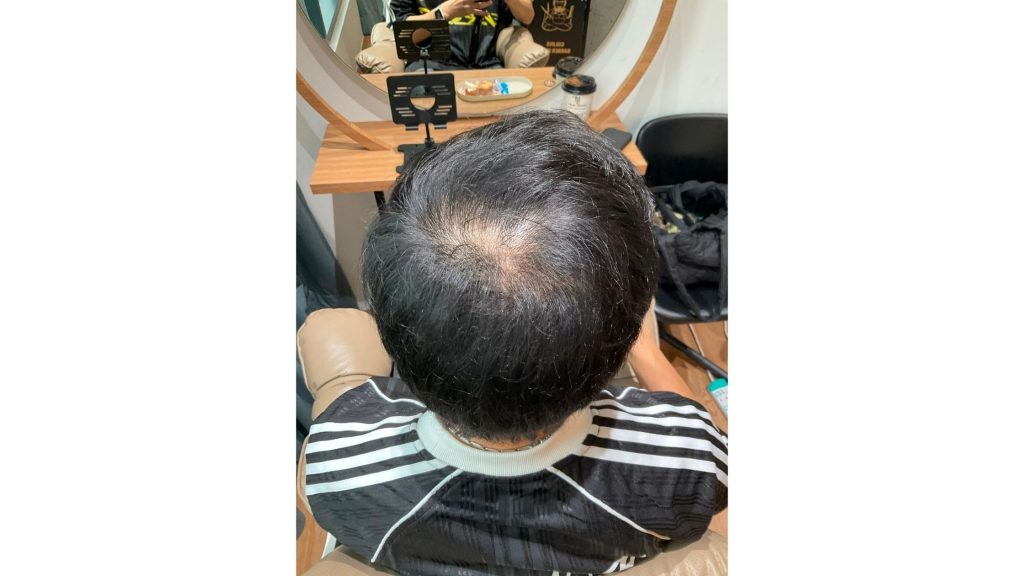
Looking back, one thing I could have done better was my hair care routine. Like many men when I was younger, I treated shampooing as a simple process—apply shampoo, create some lather, rinse, and that was it. I didn’t pay much attention to how I was cleansing my scalp, whether I was massaging properly, or what ingredients I was using. Over time, I realized that proper scalp care plays an important role in maintaining healthier hair.
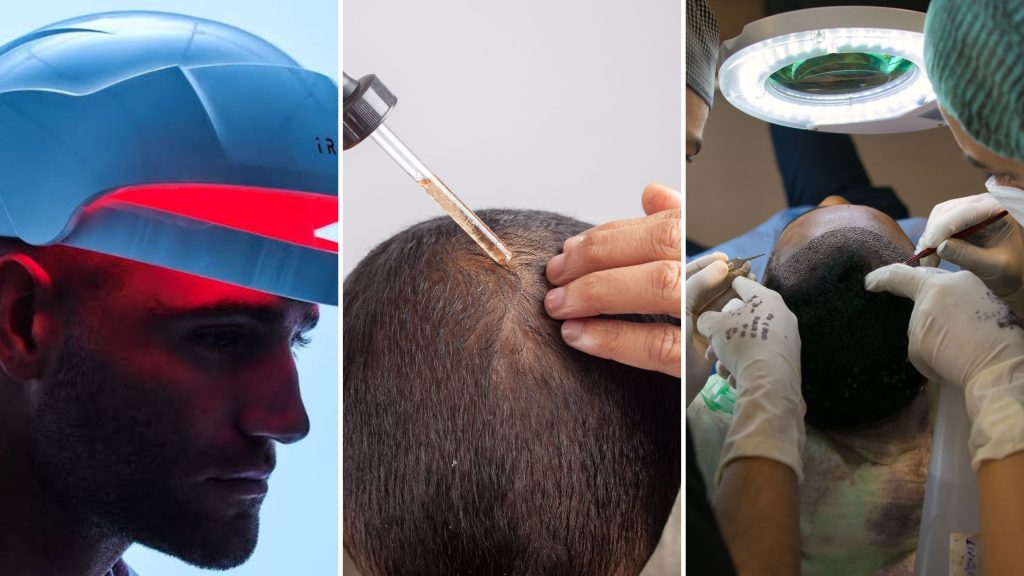
It was only when the thinning became more obvious and I started seeing bald spots that I became more serious about finding a solution. I tried different products and treatments, including PRP and laser therapy, but I didn’t see much improvement. I even started considering a hair transplant. I had friends who went through it, so I asked about the process and the cost. The price was quite high, and I started thinking about saving money for it. But when I saw that some people experienced hair loss again even after a transplant, I started questioning whether it was truly a long-term answer.
I also looked into minoxidil, but I was hesitant because I heard about possible side effects and concerns that hair loss could return after stopping. A wig was never really something I wanted to consider unless it became my last option. If it came down to that, I think I would rather just go completely bald.
After trying and considering many different approaches, I realized I was looking for something that addressed the issue more fundamentally—from down the roots. It took me a long time, but eventually, I found an approach that worked better for me.
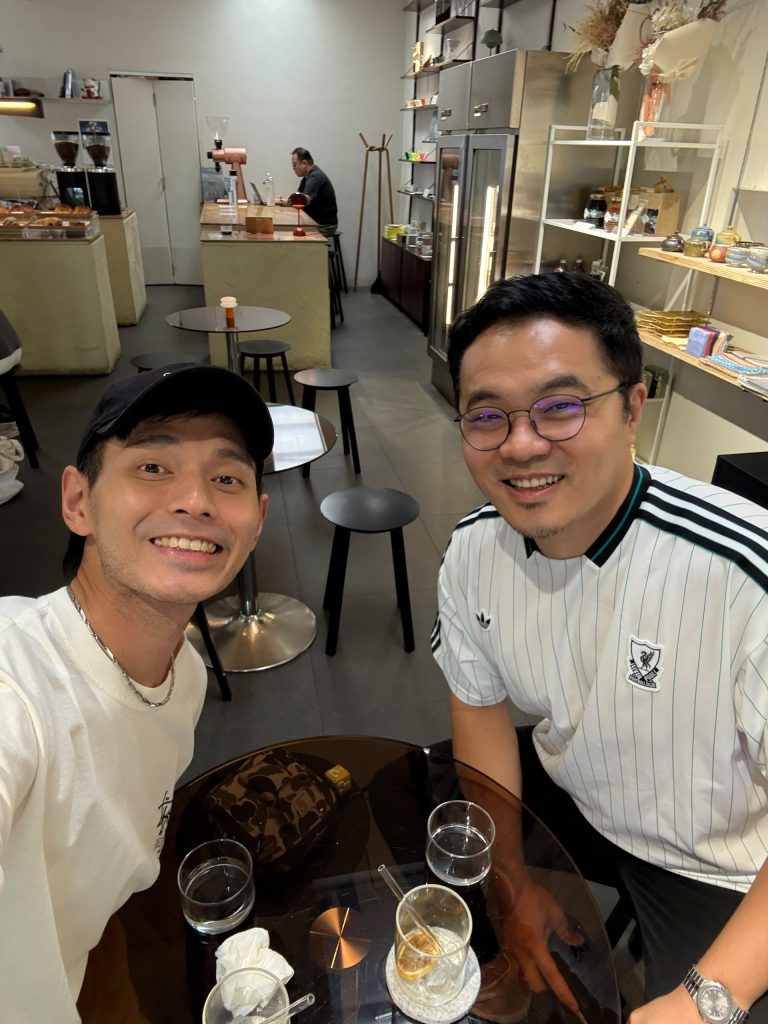
I first came to Ooosh!™ through Abel (Director of Ooosh!™ Malaysia). We were friends from church, and we got to know each other quite well when he was in KL.
Then last year, we reconnected through Instagram and eventually met up for coffee. I knew Abel had started Ooosh!™, but I didn’t really know much about it until he shared his story with me—how he brought Ooosh!™ to Malaysia because it had helped him personally.
When I heard his story, I realized that I was also dealing with hair loss myself. Abel asked if I wanted to give Ooosh!™ a try, and I thought, “Why not?” So I decided to start the journey and see the results for myself.
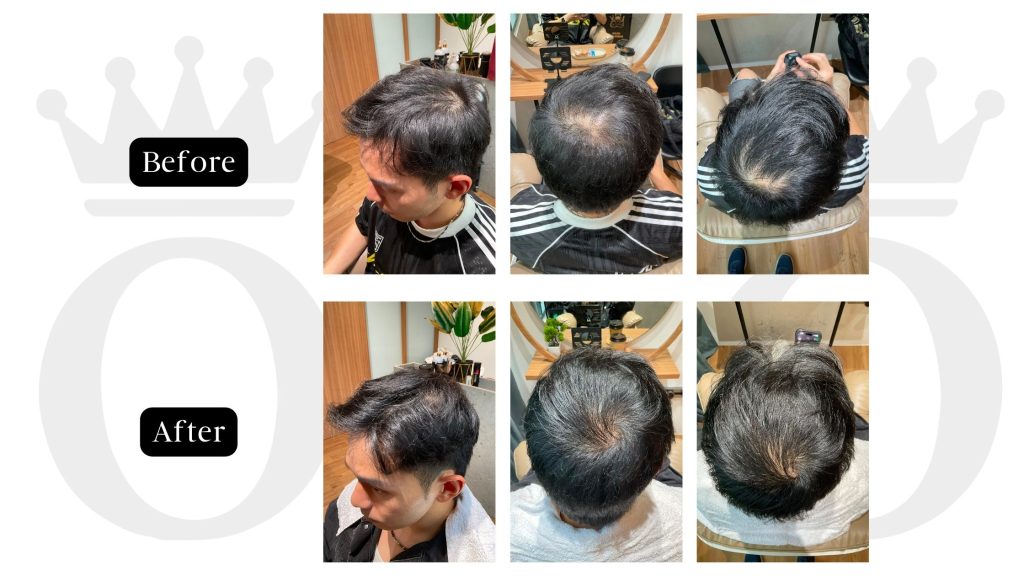
After Ooosh!™, my hair has definitely improved. It’s not perfect yet, but the biggest change is how much less I think about my hair now.
Just recently, I went on a work trip and there was a pool activity. If this happened a year ago, I would have been really nervous. I knew that once my hair got wet, any thinning areas would become much more obvious. I probably would have spent the whole time worrying about how my hair looked.
But this time was different. I got thrown into the pool, and for once, I just enjoyed myself. I wasn’t thinking, “How does my hair look now?” or “Can people see my bald spot?” I was just having fun. I think that’s the biggest change—having that freedom again. The insecurity is slowly becoming less of a burden.
And honestly, one simple thing that makes me happy is seeing much less hair on my pillow now.
Throughout my hair regrowth journey, I didn’t really focus too much on the results in the beginning. I simply followed the process consistently and trusted that it would help. During the first one to three months, I didn’t notice much difference. It was only around the third or fourth month, when I compared my progress photos from the beginning until then, that I realized there was visible improvement.
One funny thing is that before this, I didn’t really believe hair treatments would work for me. I always thought, “I have so much facial hair, maybe my testosterone levels are too high, and maybe that’s why I’m losing hair.” I thought it was something I couldn’t really change.
But now, I still have my beard, and my hair is growing back. That changed my perspective completely. I realized that hair loss isn’t always something you just have to accept—you can take steps to improve it. And Ooosh!™ actually does help, regardless of your testosterone levels!
One of the biggest lessons I learned through this journey is the importance of consistency. In the past, I tried different solutions, but I wasn’t always consistent enough with them. With Ooosh!™, the regular treatments, daily supplements, and structured routine helped me stay committed.
Of course, maintaining a schedule can sometimes be challenging, but I learned that if something is a priority, you make time for it. Put it in your calendar, commit to it, and work around it. And I had to make the choice to prioritize my hair.
Through this journey, I’ve also become more conscious about my sleep, my food, exercise, and my overall health. Taking care of my hair encouraged me to take better care of myself as a whole. Once you start building one positive habit, it creates momentum for other good habits too. For me, Ooosh!™ wasn’t just about regrowing my hair—it helped me become a healthier and more disciplined person.
If you’re struggling with hair loss, I just want you to know—it’s not the end of the world.
I understand how it feels. Hair matters, and losing it can affect your confidence. But at the same time, there’s still so much more to life beyond your hair. My encouragement is simple: try something consistently before giving up. Whether it’s a treatment, a routine, or something else you believe could help, give yourself the chance to see the results.
Try something consistently before giving up. Give yourself the chance to see the results.
Chronicles Fu Ying
Today, we have access to so much information. There are many things you can learn, many options you can explore, and many solutions you can consider. Ooosh!™ is one of those options, but the most important thing is finding something that works for you and staying consistent with it.
I decided to share my own experience because I want people to know that hair loss is a normal thing that many people go through—and it’s okay. I’ve felt insecurity and shame too, but I want people to know that it’s okay to ask for help.
Sometimes, seeing someone else openly share their journey gives us the courage to take our own first step. If my story encourages someone to find out more, seek help, or simply feel less alone in their journey, then I’m grateful I was able to share it.
My name is Chronicles, and one thing I live by is this: stop waiting for the right moment, create your own opportunities. This is my Ooosh!™ story.